Medley: 3 O'clock Blues / Darlin' You Know I Love You
6:15
7
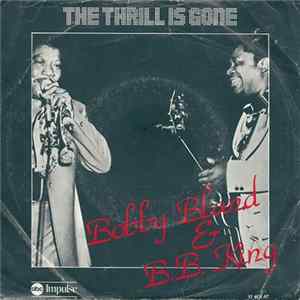
The Thrill Is Gone
5:21
8
Sweet Sixteen
4:20
Versions
Category
Artist
Title (Format)
Label
Category
Country
Year
ABCS-723
B.B. King
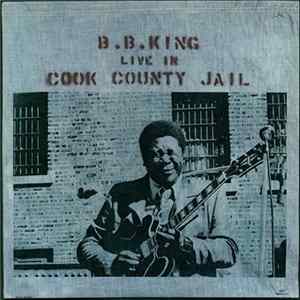
Live In Cook County Jail (LP, Album)
ABC Records
ABCS-723
US
1971
MCA-27005
B.B. King
Live In Cook County Jail (LP, Album, RE)
MCA Records
MCA-27005
Canada
1980
LPS-77804
B.B. King
Live In Cook County Jail (LP, Album)
ABC Records
LPS-77804
Venezuela
1971
113 162-1
B.B. King
Live In Cook County Jail (LP, Album, RE, 180)
ABC Records
113 162-1
Europe
2000
MCAD-11769
B.B. King
Live In Cook County Jail (CD, Album, RE, RM)
MCA Records
MCAD-11769
US
Unknown
Category
Artist
Title (Format)
Label
Category
Country
Year
ABCS-723
B.B. King
Live In Cook County Jail (LP, Album)
ABC Records
ABCS-723
US
1971
LPS-77804
B.B. King
Live In Cook County Jail (LP, Album)
ABC Records
LPS-77804
Venezuela
1971
113 162-1
B.B. King
Live In Cook County Jail (LP, Album, RE, 180)
ABC Records
113 162-1
Europe
2000
MCAD-11769
B.B. King
Live In Cook County Jail (CD, Album, RE, RM)
MCA Records
MCAD-11769
US
Unknown
ABCS-723
B.B. King
Live In Cook County Jail (LP, Album, Dyn)
ABC Records
ABCS-723
US
1971
Category
Artist
Title (Format)
Label
Category
Country
Year
ABCS-723
B.B. King
Live In Cook County Jail (LP, Album)
ABC Records
ABCS-723
US
1971
MCA-27005
B.B. King
Live In Cook County Jail (LP, Album, RE)
MCA Records
MCA-27005
Canada
1980
113 162-1
B.B. King
Live In Cook County Jail (LP, Album, RE, 180)
ABC Records
113 162-1
Europe
2000
MCAD-11769
B.B. King
Live In Cook County Jail (CD, Album, RE, RM)
MCA Records
MCAD-11769
US
Unknown
ABCS-723
B.B. King
Live In Cook County Jail (LP, Album, Dyn)
ABC Records
ABCS-723
US
1971
Credits
Alto Saxophone – Booker Walker
Bass – Wilbert Freeman
Drums – Sonny Freeman
Piano – Ron Levy
Producer – Bill Szymczyk
Tenor Saxophone – Louis Hubert
Trumpet – John Browning
Notes
Recorded in Performance at Cook County Jail, Chicago, IL., September 10, 1970.
1980 Reissue.
Notes from Back Cover: Jail, very simple, is one helluva place to be. In 1968, when the Illinois Crime Commission and a prison reform group, the John Howard Association, investigated Chicago's infamous Cook County Jail, they called it a "jungle." "Any-and-everything went," says a former inmate, "anything from heroin to whiskey to Italian food was sold and traded in the jail. Homosexual rape, bribery and murder were the bill of fare. And he added sourly, "no one seemed to give a damn." In March, 1968, Black psychologist, Winston E. Moore was appointed Warden of the jail, after a scandal resulted in the dismissal of the former Warden. The first day on the job he moved out three refrigerators from Mafia-occupied cells, collected over 200 weapons from the inmates and confiscated an undetermined amount of drugs. For six months Moore and his staff were physically challenged by the inmates. The "barn boss" system, the brainchild of a former Deputy Warden, had given dictatorial powers to the inmates whose cunning and viciousness rendered them leaders of their tiers. The "barn bosses" did not relinquish their power easily—not even to the new Warden. For a year, Moore was waging battles on several fronts. The press, who was used to having its way with the former Warden, was turned-off by Moore's curtness and seeming lack of finesse with the 5th Estate. "Private and public racists," as they were so dubbed, pestered and chastised Moore at every opportunity. Inmates, who were irrevocably stripped of street-gang leadership identity in the jail, rebelled at every offering. Friends and associates warned Moore early in the siege, he would not last—the odds were stacked against him. So it was rather ironic on September 10,1970, that B.B. King should be performing before 2,117 inmates, with minimum security, in the yard of COOK COUNTY JAIL. B.B. KING-COOK COUNTY JAIL, is a story of two men—the man who "cleaned up a mess," and a man who felt Cook County Jail was as important an engagement as Caesar's Palace. It was a long fight for Winston Moore, two years of confrontations before he became "the jail's only barn boss." It was a longer fight for B.B. King. For over 25 years, B.B. King played the "chittlin circuit," enjoyed a modest income and never received the public acclaim he deserved. After a managerial change, wider exposure has made him recognized as the "chairman of the board of blues singers." The obvious parallel of B.B. King to Horatio Alger does not do B.B. complete justice. The long, arduous journey to "stardom" renders many entertainers bitter and unobtainable. When I called B.B. King (to beg if necessary) to ask him to come and perform at Cook County Jail, he had only one question, "when do you want me"? B.B. KING-COOK COUNTY JAIL, is a manifestation of human generosity and beauty on B.B.'s part, and the raw appreciation of 2,117 of his most ardent fans. Throughout the summer of 1970, Cook County Jail has produced several shows for its inmates. Graciously the inmates cheered and applauded ALL the entertainers. After B.B.'s concert, 2,117 inmates gave him a standing ovation. In the typical B.B. King style, he simply said, "if you liked me today, can I come back again"? The answer was unanimous. B.B.'s performance will forever be a memory to all of us, especially to Winston Moore, who rung B.B.'s hand dry with appreciative thanks. From 2,117 of your fans, thank you B.B. King, for your generosity and kindness; and most of all for not forgetting us. Geoffrey Harding and 2,117